

Interview
How Brands Can Win in Gaming: A Conversation with Bastian Bergmann
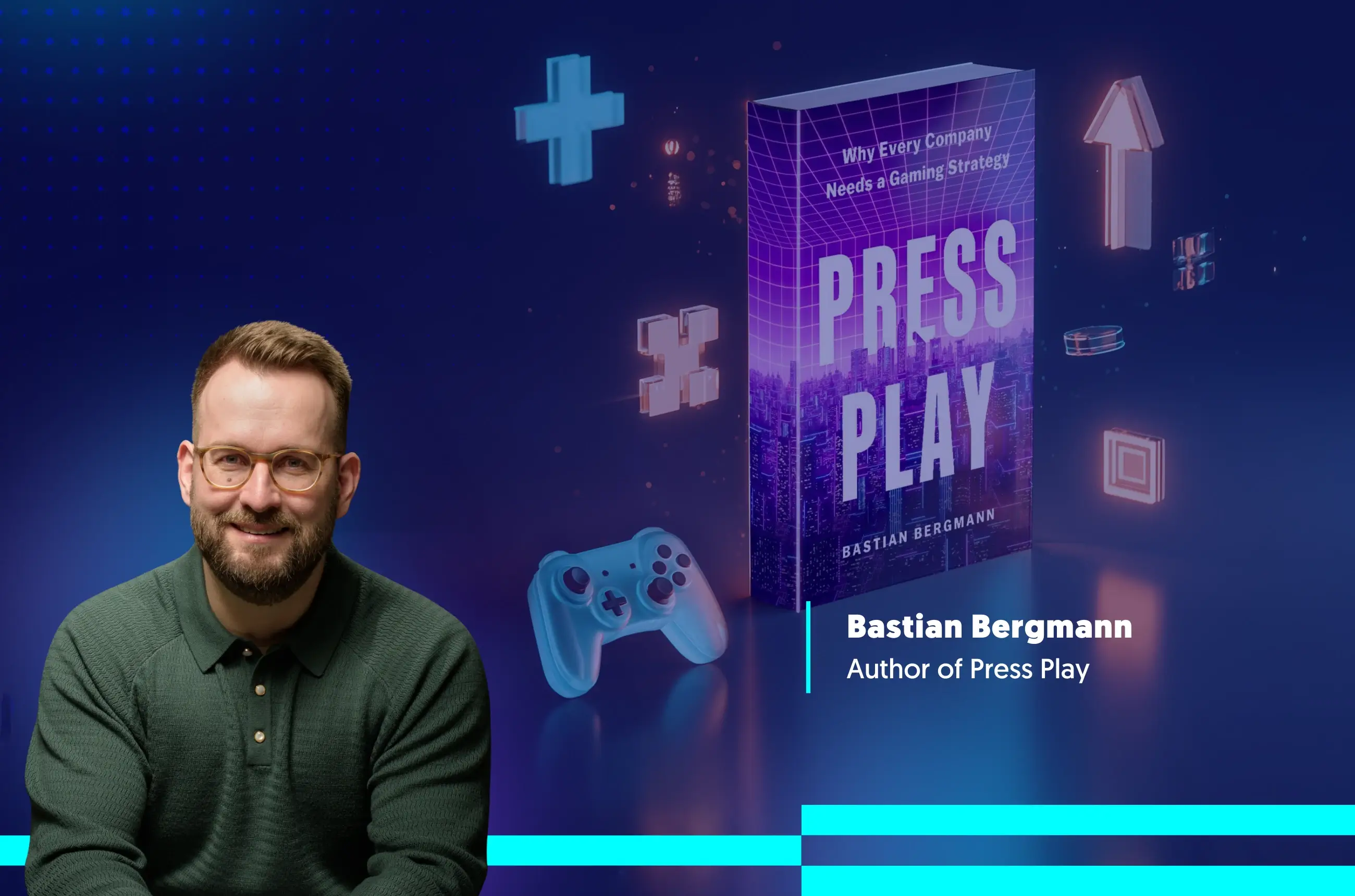
We recently sat down with Bastian Bergmann, author of Press Play, COO and co-founder of Solsten, to discuss what it actually takes for brands to get advertising “right” in gaming.
Q. Can you tell us a little about yourself and what you do?
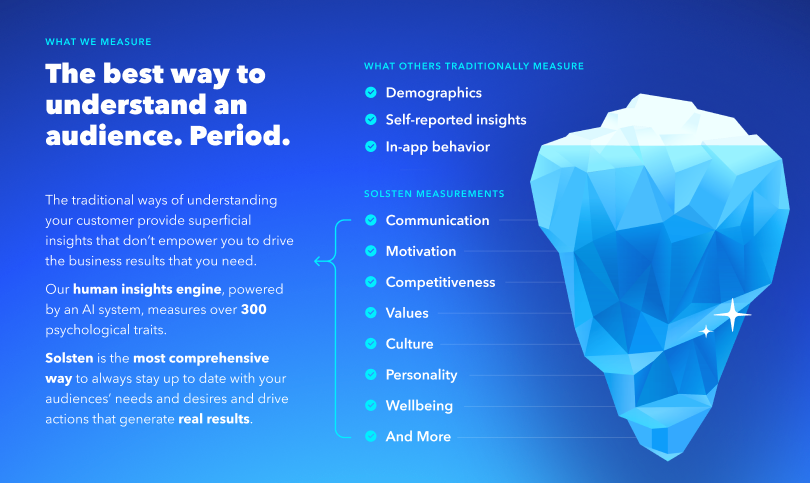
I'm COO and co-founder of a tech company called Solsten. We’re in the audience insights business, so it’s all about helping brands, game developers, marketers and advertisers to connect with the human beings behind consumers. We give them an in-depth understanding of people's psychological motivations, personality traits and value sets, and based on that we create engaging and resonating experiences. That could be within games, apps, or the actual products that people use - all the way upstream to the marketing content, brand positioning, and the creative.
In my former life, I was a consultant at BCG, working across different industries but focused on digital marketing strategy and audience segmentation. I then started my first company, which was focused on machine learning in the data privacy space, with the goal of better understanding how to let machines learn about people without compromising their data or identity.
I’m also the author of a book called Press Play, Why Every Company Needs a Gaming Strategy, which digs into video gaming as the most powerful and as the defining consumer medium of our time.
Q: In a recent interview, you said that knowing a consumer’s demographics doesn’t actually tell you who they are. What should brands be doing instead?
In truth, even some of the most advanced companies are targeting based on a limited body of data which is often generic and simplistic.
For example, they’ll decide to market a game to women from the US aged 30-40, in doing so assuming on some level that all women in that group have the same or similar tastes and interests. But you cannot tell from gender and age who someone really is, what they will like, or what motivates them.
Then they may add behavioural data, which is useful to a certain point. But this is always looking into the past - to events that already happened and do not necessarily inform the here and now - and so is a poor predictor of future behaviour, making this approach flawed, too.
We always recommend that brands move upstream. What we mean by that is you have to understand the drivers behind the behaviour - the actual human behind the audience and the consumer that you're trying to reach. That often means investing in qualitative research and combining it with quantitative data. Ideally, companies need to actually get to know the psychology of their consumer because the person's cognition, psychology, motivations and values are what compel their behaviour.
Brands also need to do some soul searching, to fully understand their own values, strategy and proposition. To meet the needs of the consumer there has to be a match between their values and those of the brand. This is how you create authentic experiences, which is especially important when moving into a gaming environment.
Q. What makes gaming such a powerful medium for brands??
It all comes down to play. If you've ever observed a toddler and how they learn about the world, it's through play. The most effective way for adults to learn new things and effectively rewire our brain is also through play. So games are effectively a digital manifestation of that.
What makes them so powerful is that underlying perpetual loop where you go from ‘I'm being presented a task’, to ‘I'm taking an action, I'm getting that immediate reward or feedback, and I'm being sent onto the next task’. That loop takes you towards a bigger goal which is dependent on active participation. Games are bi-directional, which creates that level of immersion, and makes them uniquely effective.
Social media is passive and one-directional, the same as TV. Games require you to actively participate for the experience to work, and that’s a fundamentally different thing.
There’s also the creative control advantage. On Instagram or TikTok, the feed is the feed, you get the same real estate as everyone else. But in gaming, whether you’re integrating with an existing title or building your own experience, you can shape the entire environment from the ground up to authentically represent your brand.
And let’s not forget that Gen Z and Gen Alpha spend three times more time in gaming environments than on all social media channels combined. Gen Alpha is the first generation for whom gaming is the number one medium. Plus it’s the only channel that cuts across all demographic cohorts, making it one of the most valuable components of today’s marketing mix.
Q. And how do you see brands embracing gaming effectively (or what mistakes are they making)?
The key is authenticity. The platform or game that you're choosing needs to be able to authentically represent who you are as a brand, and reach who you want to reach. If people feel like they're being (pun intended) ‘played’ by your brand in the gaming environment, it's a cheap way of getting someone's attention. When people are in a state of play and immersion, the rejection you risk getting is also exponentially higher than in any other state. That takes us back to the importance of really understanding the consumer, which is the groundwork for showing up authentically in those environments.
A frequent mistake is brands making the ad experience about themselves rather than the player. What’s more, advertisers often try to copy and paste traditional marketing and advertising playbooks into the gaming channel, which is a recipe for failure.
Games are an always-on initiative, where brands can become playable and experiential, but they should be constantly showing up and actively managing the relationships with players to make experiences in gaming truly effective.
Q. What role do specialist partners and technology providers play in making sure that brands realise the full potential of their gaming ad budgets?
A huge role. Gaming is uncharted territory for many brands and it makes sense to get help from people who have done it all before. This is the best way to ramp up learning quickly, and those partners can also calibrate against expectations. When it comes to budgets, they will make sure a brand can actually measure and track the ROI of what they want to accomplish.
Brand awareness is great but companies need to be able to track impact as far downstream in the funnel as possible, ideally to conversions and overall revenue. It’s crucial to find partners who can support you throughout the entire gaming journey and help you build that measurement framework from day one.
Q. What shifts do you expect in gaming advertising over the next year?
We’ll see more advertising within games themselves, and it’ll become much more immersive, so it doesn't look or feel like an ad, and gameplay is not interrupted. Formats like playable ads feel native to their environment, and so they start to become part of the game experience itself. Roblox is already pushing hard in this direction, and other platforms are following.
I’d also push back on the idea that there’s one platform every brand should be on. The right approach is a portfolio approach: different platforms, different gaming environments, and different ad formats for different objectives. Experiment, test, iterate, and learn. Then place your bets accordingly. There’s so much potential - it’s an exciting time.
To find out more about how to deliver more impactful advertising in gaming, check out Bastian’s recent book, ‘Press Play, Why Every Company Needs a Gaming Strategy’.


Similar posts
.webp)



Proud Member of


Certified by


